
Lost Your Period? Signs, Symptoms, and Recovery from Hypothalamic Amenorrhea
Updated: Jun 18

Have you ever wondered if losing your period is something you should actually be concerned about?
Maybe you've been told it's normal because you're active. Maybe you're eating well, exercising regularly, and checking all the boxes of a healthy lifestyle, yet your cycle has become irregular or disappeared altogether.
For some women, the missing period is accompanied by fatigue, low libido, trouble recovering from workouts, difficulty conceiving, stress fractures, or a growing sense that something just feels "off." For others, it may seem like no big deal at all.
The reality is that your menstrual cycle is much more than a fertility marker. It provides important information about your overall health and can offer valuable clues about whether your body is getting the support it needs.
As both Nutrition Coaches and Registered Nurses, we've worked with many women who were surprised to learn that their missing cycle wasn't simply a normal consequence of being busy, active, or health-conscious. In some cases, it may be a sign of conditions such as Hypothalamic Amenorrhea (HA) or Relative Energy Deficiency in Sport (RED-S), both of which can have important implications for hormonal health, bone health, fertility, recovery, and overall well-being if left unaddressed. In this blog we're covering hypothalamic amenorrhea symptoms (and how they differ from RED-S & PMOS), why they happen, recovery from HA, and how to get your cycle back.
What Is Hypothalamic Amenorrhea?
Functional hypothalamic amenorrhea (FHA) is a condition in which the brain downregulates reproductive function in response to physiological or psychological stressors such as:
Low energy intake
Excessive exercise
Rapid weight loss
Psychological stress
Poor sleep or recovery
Chronic under-fueling
A combination of these factors
When the body perceives that resources are limited, communication between the brain and reproductive system begins to slow down. The hormones responsible for triggering ovulation become less active, which can lead to irregular cycles or the complete loss of a menstrual cycle.
The hypothalamus decreases secretion of GnRH (gonadotropin-releasing hormone), which then suppresses LH and FSH production from the pituitary gland. Without adequate hormonal signalling, ovulation becomes disrupted or stops entirely (1).

Essentially, your body decides now isn't the ideal time to support reproduction due to limited resources, so it temporarily redirects energy toward functions it views as more critical for survival.
This is not solely about body weight. Many women with HA fall within “normal” BMI ranges and may even appear outwardly healthy.
It is also important to understand that hormonal birth control can sometimes mask underlying hypothalamic amenorrhea. Withdrawal bleeds on the pill are not the same as natural ovulatory menstrual cycles. For some women, HA only becomes apparent once hormonal contraception is stopped and the body is expected to ovulate independently (1).
Hypothalamic Amenorrhea Symptoms
Symptoms can vary widely, but common signs include:
Missing periods (amenorrhea)
Irregular cycles
Loss of ovulation
Difficulty conceiving or infertility
Low libido
Fatigue
Feeling cold frequently
Poor recovery from exercise
Hair thinning
Anxiety around food or exercise
Sleep disruption
Stress fractures or declining bone density
Digestive slowing or bloating
Clinically, secondary amenorrhea is typically defined as the absence of menstruation for:
3 months in someone with previously regular cycles
6 months in someone with previously irregular cycles (1)
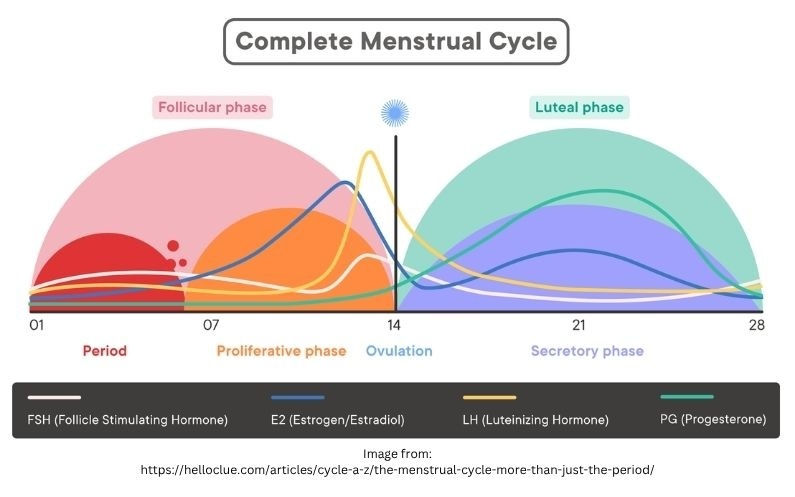
Above is an image depicting a healthy, regular menstrual cycle. When hormone signalling is disrupted due to low energy availability, the cascade of hormones that lead to ovulation (rising estrogen, rising LH and FSH) does not occur, and ovulation does not happen. Without ovulation, we do not produce progesterone, which leads to many of the above symptoms.
For many women, the first sign of HA is simply: “I haven’t had a period in months.”
HA Is a Diagnosis of Exclusion
One of the most important things to understand is that hypothalamic amenorrhea is considered a diagnosis of exclusion. This means healthcare providers should first rule out other medical causes of missing periods before diagnosing HA. (1)
Conditions that may need to be ruled out include:
Pregnancy
Polyendocrine Metabolic Ovarian Syndrome (Previously known as PCOS)
Thyroid dysfunction
Hyperprolactinemia
Premature ovarian insufficiency
Pituitary disorders
This is why proper medical assessment matters.
Bloodwork That Can Help Identify Hypothalamic Amenorrhea
There is no single blood test that definitively diagnoses HA, but patterns in bloodwork can strongly support the diagnosis when combined with clinical history and symptoms.
According to the Endocrine Society Clinical Practice Guidelines, recommended evaluation may include: (1)
Reproductive Hormones
LH (luteinizing hormone)
FSH (follicle-stimulating hormone)
Estradiol (E2)
AMH (anti-Müllerian hormone)
Prolactin
Thyroid Function
TSH
Free T4
Free T3
Additional Labs Often Considered
CBC
Electrolytes
Liver function tests
Glucose
Iron studies/ferritin
Vitamin D
Cortisol (in some cases)
Testosterone and/or DHEA-S if PMOS is suspected
Common Bloodwork Patterns Seen in HA
Many women with HA show:
Low or low-normal LH and/or FSH - reduced energy availability and stress suppress GnRH release from the hypothalamus, leading to decreased pituitary stimulation of LH and FSH.
One hallmark pattern is that LH is often disproportionately low relative to FSH.
Low estradiol- inadequate LH/FSH signaling prevents normal follicular development in the ovaries, reducing estrogen production.
Low progesterone due to lack of ovulation
Sometimes low T3- where the body downregulates thyroid activity to conserve energy during perceived energy deficiency.
However, hormone interpretation is nuanced because levels naturally fluctuate throughout the menstrual cycle. Labs should always be interpreted in context of patients symptoms by a qualified healthcare provider.
Other Diagnostic Tools
Depending on the clinical picture, additional testing may include:
Pregnancy testing
Pelvic ultrasound
Bone density scan (DEXA)
MRI if pituitary concerns exist
Ovulation tracking or cycle charting
The Endocrine Society recommends bone mineral density evaluation in women with prolonged amenorrhea because low estrogen levels increase the risk of osteopenia and osteoporosis. (1)
Why Losing Your Period Matters
One of the biggest myths we see online is:“You don’t need a period unless you want babies.” That is simply not true. Your menstrual cycle is considered a vital sign of overall health.
A missing cycle can impact:
Bone health
Cardiovascular health
Hormonal function
Mood and cognition
Thyroid function
Fertility
Recovery and athletic performance
Low estrogen over time is associated with reduced bone mineral density and increased risk of stress fractures. (5)
Hypothalamic Amenorrhea vs RED-S: What’s the Difference?
These terms are often used interchangeably, but they are not exactly the same thing.
Hypothalamic Amenorrhea (HA)
HA specifically refers to the loss of menstrual function due to hypothalamic suppression.
It is primarily a reproductive and endocrine diagnosis.
RED-S (Relative Energy Deficiency in Sport)
The International Olympic Committee (IOC) defines Relative Energy Deficiency in Sport (RED-S) as a syndrome of impaired physiological functioning caused by low energy availability, where energy intake is insufficient to support both exercise demands and the body's normal physiological processes. (6)
RED-S can affect multiple body systems, including:
Hormones
Metabolism
Bone health
Cardiovascular function
Immune health
Recovery
Athletic performance
Importantly, RED-S is not limited to elite athletes. It can occur in recreational exercisers, active individuals, both men and women, women who menstruate, and people of all body sizes.
Hypothalamic amenorrhea is often considered one potential consequence or manifestation of RED-S in women.(4)
Not everyone with RED-S will lose their menstrual cycle, and not everyone with hypothalamic amenorrhea meets the criteria for RED-S. However, both conditions commonly share an underlying driver: insufficient energy availability relative to the body's needs.
This is why addressing nutrition, recovery, stress management, and overall energy balance is a key component of recovery.
The older term, Female Athlete Triad, was previously used to describe this condition, highlighting only three areas - low energy availability, menstrual dysfunction, and low bone mineral density.
As research evolved, it became clear that insufficient energy intake can impact far more than reproductive and bone health alone. This led to the development of the broader term Relative Energy Deficiency in Sport (RED-S), which recognizes that low energy availability can affect multiple body systems, including metabolism, cardiovascular health, immune function, recovery, performance, and mental health. (5)
HA, PMOS, and the Importance of a Thorough Health History
One of the most important — and often frustrating — parts of the diagnostic process is that hypothalamic amenorrhea and PMOS (formally named PCOS) can sometimes appear similar on paper, particularly in lean or highly active women.
We have seen women told they have Polyendocrine Metabolic Ovarian Syndrome based solely on irregular or missing periods and an ultrasound showing “polycystic appearing ovaries,” when in reality the underlying issue was hypothalamic suppression from under-fueling, chronic stress, or excessive exercise.
This matters because the treatment approach for HA versus PMOS can be very different.
In hypothalamic amenorrhea, the body is often in a state of energy conservation and stress adaptation. In many cases, recovery requires:
Increasing energy intake
Reducing excessive exercise
Improving recovery
Supporting overall metabolic and hormonal health
In contrast, treatment approaches for PMOS may focus more heavily on insulin resistance, ovulatory support, or androgen management depending on the presentation.
Research has shown that up to 50% of women with functional hypothalamic amenorrhea may demonstrate polycystic ovarian morphology on ultrasound, despite not truly having PMOS (6). This is one reason imaging alone should never be used to diagnose PMOS.
If you would like to learn more about PMOS , please see our blog that goes into this in detail, here.
A detailed health history is often one of the most valuable tools in distinguishing between the two.
Important questions include:
Was there recent weight loss?
Has exercise volume or intensity increased?
Is there chronic dieting or under-eating?
Is the individual highly stressed?
Did the cycle disappear after a fat-loss phase or intense training period?
Are there signs of low energy availability?
Are symptoms of androgen excess present, such as acne, excess facial hair growth, or elevated testosterone?
Bloodwork patterns can also differ.
As previously mentioned, women with HA often present with:
Low estrogen
Low or low-normal LH and FSH
Lower metabolic markers
Signs consistent with energy deficiency
Whereas PMOS more commonly presents with:
Higher androgen levels
Irregular ovulation rather than complete suppression
Different LH:FSH patterns
Clinical signs of hyperandrogenism
That said, there can absolutely be overlap, and some women may experience both low energy availability and underlying PMOS tendencies simultaneously.
This is why individualized assessment matters so much. Hormones should never be interpreted in isolation from the person sitting in front of you. A comprehensive health history, symptom picture, lifestyle assessment, and appropriate lab interpretation are essential for making the most accurate diagnosis and creating the right recovery plan.
Hypothalamic Amenorrhea Symptoms and Recovery: What Actually Helps
Understanding hypothalamic amenorrhea symptoms and recovery together is important because the path forward depends on recognizing both. Recovery from HA is rarely about one supplement, medication, or hormone protocol.
At its core, HA is usually a sign that the body does not currently have enough available energy to support all physiological processes optimally.
Evidence-based recovery strategies often include: (1)
Increasing caloric intake
Reducing excessive exercise
Improving carbohydrate intake
Prioritizing sleep and recovery
Addressing psychological stress
Working through food fears or exercise compulsion
Supporting nervous system regulation
Sometimes, gaining body fat or body weight
The encouraging news is that hypothalamic amenorrhea is often reversible with adequate nutrition, reduced stress, and restoration of energy availability. Many women are able to regain ovulation and fertility with appropriate support.

An important note - Recovery is often deeply emotional.
For many women, HA recovery means challenging identity, perfectionism, control, or fear around body changes. That was certainly true in my own experience.
As someone who has gone through it personally, I can say this: Getting your cycle back is not “letting yourself go.”
It is often a sign your body finally feels safe enough to thrive again.
Final Thoughts
If you have lost your cycle, please do not ignore it simply because you:
look healthy,
perform well,
are lean,
or have been told it is “normal for athletes.”
Your body is always communicating.
Missing periods are not just an inconvenience — they are information.
And while HA can feel frustrating and isolating, recovery is absolutely possible with the right support, nourishment, and approach.
We would love to support you in your recovery journey. To book a free consultation call, click here.
Author: Megan Reger,RN
_________________________________________________________________________________
REFERENCES
Gordon CM, Ackerman KE, Berga SL, et al. Functional Hypothalamic Amenorrhea: An Endocrine Society Clinical Practice Guideline. Journal of Clinical Endocrinology & Metabolism. 2017.
De Souza MJ, Nattiv A, Joy E, et al. 2014 Female Athlete Triad Coalition Consensus Statement on Treatment and Return to Play of the Female Athlete Triad. British Journal of Sports Medicine. 2014.
Gordon CM et al. Functional hypothalamic amenorrhea is commonly associated with stress, weight loss, excessive exercise, or a combination thereof.
Mountjoy M, Sundgot-Borgen J, Burke L, et al. The IOC Consensus Statement: Beyond the Female Athlete Triad—Relative Energy Deficiency in Sport (RED-S). British Journal of Sports Medicine. 2014.
American Academy of Pediatrics. The Female Athlete Triad. Pediatrics. 2016.
Gordon CM, Ackerman KE, Berga SL, et al. Functional Hypothalamic Amenorrhea: An Endocrine Society Clinical Practice Guideline. Journal of Clinical Endocrinology & Metabolism. 2017. Polycystic ovarian morphology may be present in women with FHA despite absence of true PCOS.
Mountjoy M, Ackerman KE, Bailey DM, et al. 2023 International Olympic Committee's (IOC) Consensus Statement on Relative Energy Deficiency in Sport (REDs). British Journal of Sports Medicine. 2023;57(17):1073-1098 Hypothalamic Amenorrhea Symptoms and Recovery


Comments